
 en
en
 da
da



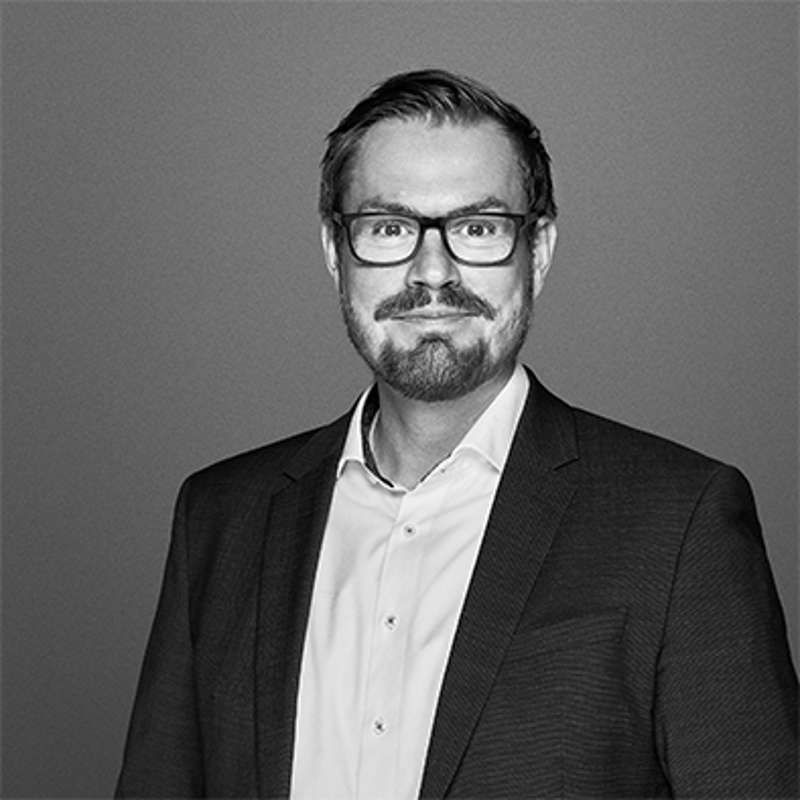
When the Danish children's design company Done by Deer needed to change ERP system, they commissioned a preliminary analysis to understand which system would suit their business. And even before going live with their new ERP system, the preliminary analysis has already paid for itself through better stakeholder management, greater process insight and sharper supplier evaluation.
The Danish company Done by Deer is known for its functional and aesthetic products for babies and toddlers. And all their products bear the company's slogan 100% friendly. But 100% friendly is more than just a slogan – it's also an important guiding principle internally within the business, explains Done by Deer's Head of Finance, Thomas Hejbøll, when we speak to him about the preliminary analysis that Done by Deer chose to commission in connection with their ERP system change.
”We make children's and baby products, so of course we focus on ensuring that everything is of the best quality and meets the right standards, but quality and reliability are actually also important internally,” says Thomas Hejbøll over a Teams connection from the company's head office just outside Silkeborg.
Done by Deer continuously works to make itself more friendly, so that it can meet customers and partners in finance, reporting and sales in a better and more user-friendly way. And this includes improving the business' systems and processes.
The old ERP system had become a business risk
But why had an ERP change become necessary for Done by Deer?
”We have an old ERP system from 2014, when we started with C5, but it's approaching end-of-life now. We're finding that it's more unstable, and there isn't as much support for it anymore,” says Thomas Hejbøll.
And an ERP system where the amount of downtime is increasing whilst the amount of support is declining poses a major business risk. Because when the ERP system doesn't work, virtually all other processes within sales, warehouse and logistics also grind to a halt.
At the same time, there's also a business risk in that the system was becoming inflexible and difficult to future-proof for Done by Deer.
”If we can't expand the system sufficiently to create efficient processes, and if we can't get integrations with external systems, or if those integrations are insecure because we have to move too many files between systems and can't build bridges between them – then there's also a risk.”
Thomas Hejbøll is silent for a moment. "In the end, we reached the point where we could see that now is the time."
Used the preliminary analysis as a stakeholder management tool
But changing ERP system is a major task with many touchpoints in the organisation and therefore also many stakeholders. And here the preliminary analysis was a great help in navigating the task, says Thomas Hejbøll.
”We've obviously always had an idea of which systems exist, but we don't have detailed knowledge of them. So we needed to find out which system would be a good fit for us," he says.
At the same time, the preliminary analysis was also a way of driving stakeholder management towards the board.
”It was an important tool for securing our board's support. We wanted to be able to show them that we hadn't gone with the first and best offer we received, but that we'd actually investigated what suits us and what fits with the development we're heading into."

Basico's preliminary analysis is made up of seven modules, which can be assembled according to needs. Some companies need the entire package, from process analysis to implementation plan. Others, like Done by Deer, choose only the parts they need – in this case Process Review, Roadmap and Requirements Specification.
Understanding the processes was the most important thing
And precisely the understanding of what suited Done by Deer was the reason they chose Basico as their preliminary analysis partner, explains Thomas Hejbøll:
”Basico came with a CFO approach. You understood our processes in the finance department and focused on what kind of business the system needs to fit, as opposed to the other providers, who had more focus on the systems themselves and what they could do."
Because an ERP change is about much more than the technical specifications of the individual ERP systems. And management and the others involved in Done by Deer's ERP project were aware of that. Most of them already had experience with ERP projects, which had given them a realistic sense of the scope of the task:
”We all know that it's not simply a matter of plugging in a new system and then it runs. There's plenty of preparation. And there's plenty of change management, because there will also be some processes that are challenged in this. And then we need to choose whether it's the process or the system that needs to be changed.”
And here the process-oriented approach has helped Done by Deer ask the right questions when they were challenged on their business procedures.
”We've had quite a few internal discussions about what we prioritise most highly. Is it, for example, that something is cheaper but takes longer? Because all efficiency has a cost, and the question is whether the cost pays off.”
One concrete thing that has happened is that Done by Deer's system landscape with the new ERP system is becoming smaller instead of larger.
”Our original idea was that we should have an ERP system and then some systems alongside it that could, so to speak, talk to the ERP system," says Thomas Hejbøll. "You challenged that and made me understand that it would eliminate some risks if we could get these functions into the system itself instead.”
The modern finance leader's dilemma
Generally speaking, Thomas Hejbøll welcomes the opportunity to challenge the business. Therefore, he has been very involved in all the work with the preliminary analysis and feels that it has given him a thorough knowledge of the company's financial processes.
”It's a good way for me as well to get right in and understand the entire business and the data that forms the basis for our entire business strategy,” he says. ”So when I need to challenge it, I know which systemic challenges lie behind it, just as I also have a far better understanding of where and how our data originates.”
Because sitting back and not engaging is not an option for the modern finance leader, who not only needs to have control of the figures, but who must also be able to challenge the business and be a sparring partner for the board. The data that flows through an ERP system forms the basis for Thomas Hejbøll as Head of Finance to deliver an engine room that functions – and for him to have confidence that the figures he presents are also the correct ones.
And that points to a dilemma modern finance leaders often face: It's your responsibility that the figures are in order and that you can trust them, but you don't necessarily have the time to familiarise yourself with how they originate.
Will benefit both the customers and the business
But the ERP change isn't only about risk. A new system will also provide new opportunities for the experience Done by Deer can offer both customers and internal collaboration partners:
”In an ERP context, our slogan about being 100% friendly can be translated into better systems and better processes ‒ for example, that we won't have to sit and key in everything. Because when we get the new ERP system, we have the opportunity to make all the manual, tedious tasks more automatic,” says Thomas Hejbøll.
”With the new system, we'll get an easier and more electronic ordering process, which will benefit both the customers and ourselves. Because in a newer and updated system, everything that we have to build into our system ourselves today will come automatically ‒ right from the way we send delivery notes to which data the customer receives.”
The preliminary analysis has already paid for itself
If you ask Thomas Hejbøll, there's no doubt that the ERP preliminary analysis is already starting to pay for itself, purely in the form of better knowledge of the business's processes and system landscape.
And when they implement the new system, the preliminary analysis will also benefit Done by Deer.
”We know where we need to place particular focus. We know where we have some challenges that we need to find a solution to, and we have a tool we can use to assess how the different ERP systems and their configuration suit our needs,” he says, revealing that they have actually already used the preliminary analysis in their evaluation of the potential suppliers.
”It gave us a really good picture of whether they understood what we needed and how we should use the system. Because there were indeed some suppliers where we could immediately see that they had either not read the preliminary analysis or had not understood it – so we weren't going to use them.”

Thomas Hejbøll took up the position as Head of Finance at Done by Deer in May 2024 and brings such strong IT skills into the role that he has become a bridge between finance and IT in the business. When he's not got his nose in figures and systems, he spends his time on what gives him energy: his family, a good padel match – and a group of enthusiastic U13 football boys at Skødstrup SF, whom he attempts to keep as structured as an Excel spreadsheet.
Planting a seed for future improvements
But what's next to happen in the ERP project at the friendly Silkeborg-based company?
”We're in dialogue with some potential suppliers who have run some workshops with us to work out which of the needs the system can already meet and what we need to have built on top – and not least, what needs to be built now and what we can wait a bit with,” says Thomas Hejbøll.
After that, they need to make the final system choice, and then the last phase of preparations begins before they can go live with the new ERP system during 2026.
”We're not in a place where there are rules we're not complying with, so even though we'd like to get there as quickly as possible, we shouldn't rush the process. It needs to work properly when we go onto the new system,” he explains. And if he could give one piece of advice to other finance leaders facing an ERP change, the answer is clear:
”Get involved in the process. It provides the best way to gain an understanding of not just the ERP system, but of the entire business. Because going through the processes and how they're connected in the way we've done in connection with the preliminary analysis gives you a complete picture of how your company is put together.”
He thinks for a moment before concluding:
”It also gives you a really good opportunity to challenge the processes a bit in advance and perhaps plant a seed for future improvements.”
Are you facing an ERP project?
And would you also like to know what a process-oriented preliminary analysis can do for your business? Then don't hesitate to reach out to us for an informal chat.